Branches Over the Fence: Sorting a Neighbour's Tree Without Turning It Into a Court Case
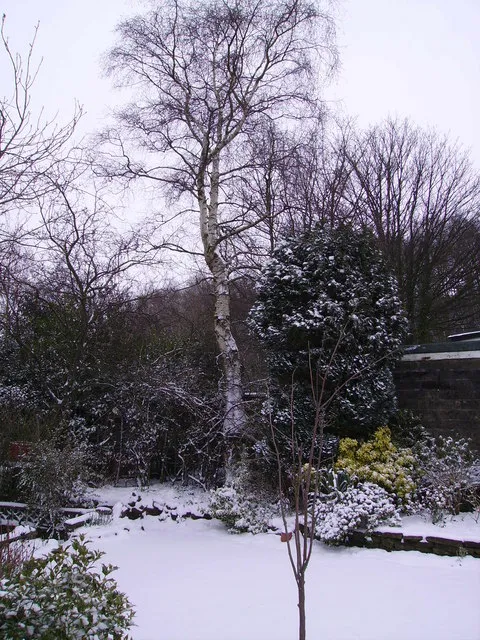
Photo: Ron Shirt, CC BY-SA 2.0, via Wikimedia Commons
Few things sour a street faster than a tree that one household loves and the other regards as a monthly nuisance. The good news is that most neighbour tree problems are solvable without solicitors, council enforcement or a feud that outlasts the tree itself. The trick is to separate the emotional bits from the practical ones, and to know what you can reasonably do before you pick up a saw.
This is general information for UK homeowners, not legal advice. The rules are not identical across England, Wales, Scotland and Northern Ireland, so if money, damage or a protected tree is involved, check with your local council tree officer or a qualified professional.
Start by naming the problem properly
A tree dispute is rarely just about branches. It might be shade, leaf litter, blocked gutters, roots lifting a patio, sap on a car, or the quiet fear that a big limb will come down in the next gale. Those are different problems with different answers.
Branches are usually the simplest. If a neighbour's branches overhang your boundary, you may normally cut them back to the boundary line, working from your own side and without entering their land without permission. You should not cut beyond the boundary, climb the tree without consent, or do anything that kills or seriously damages it. The cuttings generally remain the neighbour's property, so offering them back is the polite and sensible move rather than lobbing them over the fence.
Roots are a much murkier area. A root crossing your boundary is not automatically yours to sever. Cutting significant roots can destabilise a tree, kill it, or create a bigger problem than the one you started with. If roots are affecting a patio, drain, driveway or foundation, get proper arboricultural and, where necessary, structural advice before anyone starts cutting.
Check for a Tree Preservation Order or conservation area first
This is the step people skip, and it can be expensive. A Tree Preservation Order, usually shortened to TPO, protects a tree even if it grows on private land. In a conservation area, you may need to give the council notice before carrying out certain work to trees. Protected status does not vanish simply because the branches are on your side of the fence.
Before any pruning, removal or root work, contact your local council's tree officer and ask whether the tree is protected. If it is, you may need formal consent or permission before work starts. Carrying out unauthorised work to a protected tree can lead to enforcement action and, in serious cases, prosecution. The same caution applies if the tree is in a conservation area and you are unsure what counts as permitted work.
When the problem is a hedge, not a tree
England and Wales have specific high hedges legislation, which can apply to evergreen or semi-evergreen hedges over roughly two metres high that are causing a loss of light or enjoyment. It is not a general remedy for every nuisance tree. The council will usually expect you to have tried to resolve things with your neighbour first, and the process can take time. Scotland and Northern Ireland have their own arrangements, so do not assume the same form applies everywhere.
Build a boring, useful paper trail
If the issue is ongoing, start keeping records before you need them. Photograph the overhang, the debris, the cracks, the blocked gutter or whatever else is bothering you, and date the images. Keep a short diary of incidents. Save letters, emails and messages. If a contractor has given advice, keep the written report.
When you write to your neighbour, be specific and unemotional. Explain the problem, what you are asking for, and a reasonable timescale. For example: the branches over my parking space are catching the car; could we agree for a contractor to trim them back to the boundary in the next month, with the cost discussed? A clear request is easier to answer than a general complaint.
Try the human route before the official one
A knock on the door or a polite note is still the cheapest and fastest option. Offer to share the cost of a joint inspection or a contractor's visit. Suggest a date that works for both households. If the tree is genuinely dangerous, say so plainly and ask for urgent action, but avoid turning every fallen leaf into evidence of bad faith.
If talking directly feels impossible, mediation services can help. Some councils offer or signpost mediation for neighbour disputes. It is not a sign of weakness; it is often cheaper than a solicitor's letter and much cheaper than a court case.
When to involve the council or a professional
Contact the council if the tree is protected, in a conservation area, or if it presents an immediate danger to people or property. For high hedges, use the council's high hedges process after you have tried to resolve matters directly. For structural damage or serious nuisance, a solicitor or your insurer may need to be involved. An arboriculturist's report can be invaluable because it gives everyone a factual starting point rather than two households trading opinions over the fence.
Courts should be the last resort, not the opening move. They are slow, costly and rarely improve neighbourly relations. If you do reach that stage, a clear timeline of photos, letters and professional reports will matter far more than a dramatic story about the tree that ruined summer.
The short version
Identify whether you are dealing with branches, roots, debris or a hedge. Check protection before cutting anything. Trim only what genuinely overhangs your side, and only from your own land. Do not butcher roots without advice. Talk first, document as you go, and involve the council or a professional when the law, safety or significant damage is in play. The tree may be the neighbour's, but the relationship is shared, and a measured approach usually works better than a fence-line showdown.