Rent, Rev, Regret: The Hidden Bill Behind a DIY Chainsaw Weekend
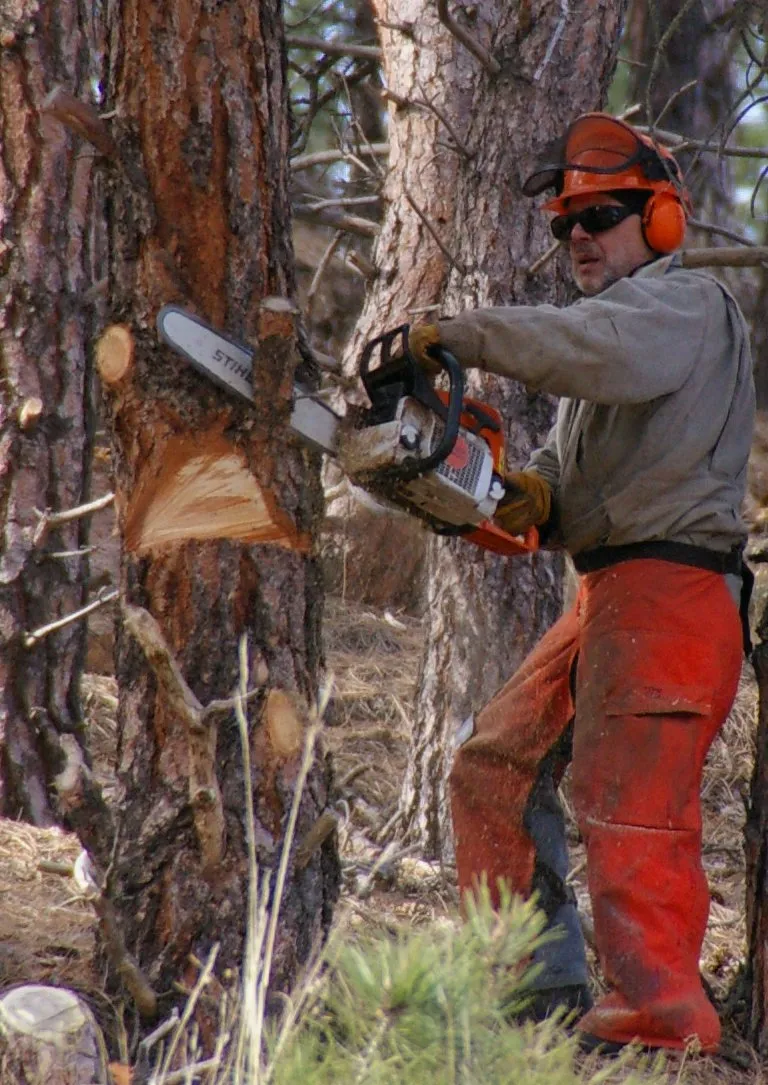
Photo: Hustvedt, CC BY-SA 3.0, via Wikimedia Commons
Every autumn, the same advert appears in the window of the local hire shop: chainsaw, helmet, day rate, no questions asked. The message is seductive. Why pay a tree surgeon hundreds of pounds when you can rent the tool, watch a video, and spend a Saturday sorting out the garden yourself? As a theory, it is tidy. As a practical calculation, it often falls apart.
I am not against DIY. I am against the particular DIY fantasy that a chainsaw turns a difficult tree job into a straightforward one. A chainsaw is a fast, loud, unforgiving tool. The rental counter does not come with the experience that makes it safe.
The hire shop bargain that isn't
On paper, the rental is the cheap part. Then you add fuel, oil, sharpening, personal protective equipment, and the trip back to the shop. If you need a ladder, a rope, or a friend to hold something steady, the costs climb. If you damage the chain or bar, you may be paying for repairs. If you hurt yourself, the real bill is not the day rate.
The bigger hidden cost is waste. A decent-sized branch can produce a surprising volume of green waste. Council tips have rules, waiting times, and limits. A skip or a licensed waste collection costs money. If you pay someone to take the cuttings away, check where they are going. Fly-tipped garden waste is a problem, and the duty of care does not disappear just because the job was small.
Safety is not a side issue
Chainsaw injuries are not rare because chainsaws are mysterious. They are rare among trained users because trained users respect the basics: stable footing, a clear escape route, sharp chain, correct protective clothing, and no work above shoulder height. Add a ladder to the equation and the risk jumps. Add a windy day, a leaning branch, or a tree near a fence and it jumps again.
Kickback is the word every user should know. It happens when the tip of the bar catches and the saw kicks back towards the operator. It can happen in a split second. A hard hat and trousers help, but they do not make a bad plan safe. If the job needs a chainsaw, a ladder, or a climb, it is not a beginner's job.
The insurance gap nobody reads
Home insurance is not a magical safety net. It may cover accidental damage to your property, but it may not cover hired equipment, injury to the person using it, or liability for damage to a neighbour's car or conservatory. Some policies exclude work at height or use of powered tools. If a friend helps and gets hurt, the friendly favour can become a liability question. A qualified tree surgeon carries public liability insurance for exactly this reason. You are not just paying for the saw. You are paying for the cover behind it.
Waste disposal and the paperwork
There is also a paperwork angle. If you hire a van and take garden waste to the tip, check the rules first. If you pay someone to remove waste, ask for their waste carrier registration. A legitimate operator will not mind the question. A cheap quote with no paperwork is often cheap because something is being avoided.
What DIY genuinely covers
None of this means every garden job needs a professional. Light pruning of small shrubs, cutting back a few soft stems, clearing leaves, and tidying low branches with loppers or a pruning saw can be sensible DIY. The line is easier to draw than people think. If your feet are on the ground, the branch is small, the tool is hand-powered, and the waste fits in your green bin, you are probably fine. If you are looking at a chainsaw, a ladder, a rope, or a tree with a trunk wider than your thigh, step back.
What a professional is actually charging for
A tree surgeon is not charging you for the pleasure of owning a bigger chainsaw. The quote covers training, insurance, climbing or access equipment, waste removal, and the judgement to know which cuts help the tree and which ones cause decay. It also covers the awkward bits: the branch over the greenhouse, the tree near the phone line, the stump that needs grinding below ground. Good tree work is often less dramatic than DIY, and that is the point.
A fair way to decide
Before hiring a chainsaw, write down the job in one sentence. If it includes the words climb, fell, reduce, or near the house, get a quote. If it includes the words dead, storm, or power line, do not touch it. If it is a small snip at ground level, enjoy the fresh air. The rental shop will always sell you the tool. It will not sell you the judgement, the insurance, or the clean-up. That is the illusion, and it is usually more expensive than it looks.