Saw Later, Not Sorry: A Homeowner’s Guide to Nests and Tree Work
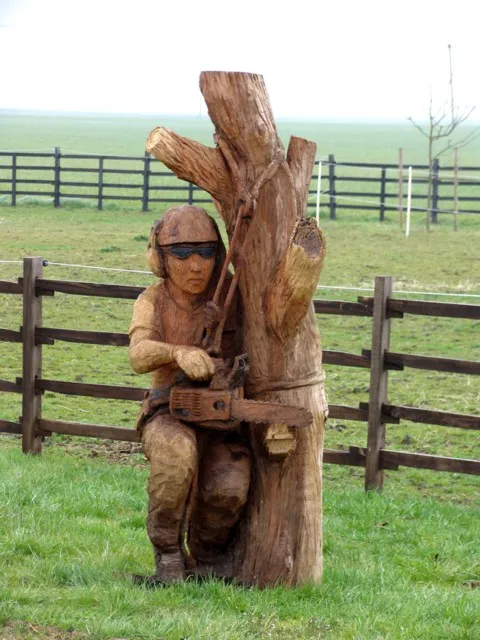
Photo: Andrew Tatlow, CC BY-SA 2.0, via Wikimedia Commons
There’s a moment, usually just as the ladder comes out, when someone says: ‘Hang on, isn’t there a nest in that one?’ It’s a fair question, and not just because nobody wants to be the person who disturbs a blackbird’s hard work. In the UK, active wild bird nests are protected, and tree work that ignores them can become a legal problem as well as a sad one.
But this isn’t a call to leave every tree untouched until October. It’s about timing, checking, and knowing when to put the saw down and when to pick it up with confidence. The nest check isn’t a box-ticking exercise. It’s a practical pause that keeps you, the tree, and the wildlife in it out of trouble.
The calendar is part of the toolkit
Most UK birds nest between March and August, but nature doesn’t read the same diary as the rest of us. Pigeons can nest almost year-round, some birds start early in mild winters, and a late brood can push activity into September. That means the safest approach is not simply to avoid one fixed set of months, but to check the tree in front of you before work starts.
Right now, in mid-November 2026, most deciduous trees are bare and the main nesting window is closed for many species. That makes the coming weeks a good time to book pruning or removal if you’ve been putting it off. The quiet months are called quiet for a reason: fewer leaves, fewer nests, and a clearer view of what the tree actually needs.
What an active nest looks like
You don’t need to be a birdwatcher to spot the obvious signs. Adults flying in and out of the same spot, carrying food or nesting material, is the classic clue. You might also see droppings on leaves or branches below, hear loud chick calls, or notice a neat cup of twigs, moss, or grass wedged into a fork. Some nests are tiny and well hidden; others are more like a pile of sticks with a bird sitting on top, looking offended by your presence.
What you won’t always see is the nest itself. That’s why a proper check means looking from the ground, using binoculars if needed, and being cautious about climbing into the canopy just to satisfy curiosity. If you can’t see a nest but birds are behaving as if there is one, assume there is one until you know otherwise.
The law in plain English
Across the UK, the broad principle is similar: it is an offence to intentionally take, damage, or destroy the nest of a wild bird while it is in use, or to disturb dependent young. In England, Wales, and Scotland the Wildlife and Countryside Act 1981 is the key legislation, with extra protection for certain Schedule 1 species. Northern Ireland has its own equivalent rules. The details vary, but the practical message for homeowners is consistent: don’t interfere with an active nest.
This applies to light trimming as well as full removal. If a branch holds a nest, cutting it is obviously a problem. But removing nearby cover can also expose a nest to weather and predators, or cause adults to abandon it. Even a ‘quick tidy’ of a hedge or a low limb can be enough to disturb breeding birds. The law isn’t there to make garden maintenance impossible; it’s there to make sure the work happens at a sensible time.
Plan for the dormant season
For most tree work, the best window is late autumn through to early spring, once the leaves are off and before the next nesting season gets going. This is when arborists can see the structure of the tree clearly, make clean pruning cuts, and remove deadwood without the complication of active nests. It’s also easier to spot defects that are hidden by summer growth.
That doesn’t mean every tree must be pruned in winter. Some species and some situations are different, and a good tree surgeon will advise on the right timing for the tree as well as the wildlife. But if you have a choice, booking for the quieter months is usually the simplest way to avoid a last-minute panic. It also means you’re less likely to be told that the work has to wait while a family of tits finishes raising its brood.
If the work can’t wait
Sometimes it can’t. A storm-damaged limb over a path, a dangerous split, or an urgent safety issue may need attention even in spring. In that case, the answer is not to ignore the risk, but to manage it carefully. A tree surgeon should check for nests before starting, and if one is found, work should stop in that area. An ecologist may need to advise, especially for protected species or if the nest is close to the work zone.
Sometimes the solution is a buffer: leave that branch, protect the area, and do the rest of the job. Sometimes it’s a matter of hand tools rather than chainsaws, or a short delay until the young have fledged. The right approach depends on the tree and the species, but the principle is to avoid disturbance rather than simply crack on and hope for the best.
Questions worth asking before you book
If you’re hiring a contractor, ask how they handle nests. A professional outfit won’t be offended by the question. Good answers include checking before work starts, knowing what to do if a nest is found, and being willing to reschedule or adjust the job. Ask whether they keep a record of the check, and whether they’ll stop work if they find something. It’s also fair to ask whether the work can be moved to the dormant season if there’s no urgent safety issue.
For DIY work, the same rule applies to you. Check first, look for signs of activity, and don’t start cutting a branch that you haven’t properly assessed. If you’re unsure, wait. A tree can usually wait a few weeks. A nest can’t.
The nest check is not a formality, but it isn’t a reason to be paralysed either. It’s a simple piece of good practice: look, plan, and choose the right moment. Do that, and you can get the tree work done without turning a garden job into a wildlife incident.