The Distance Is a Conversation, Not a Number: Trees and Houses in UK Gardens
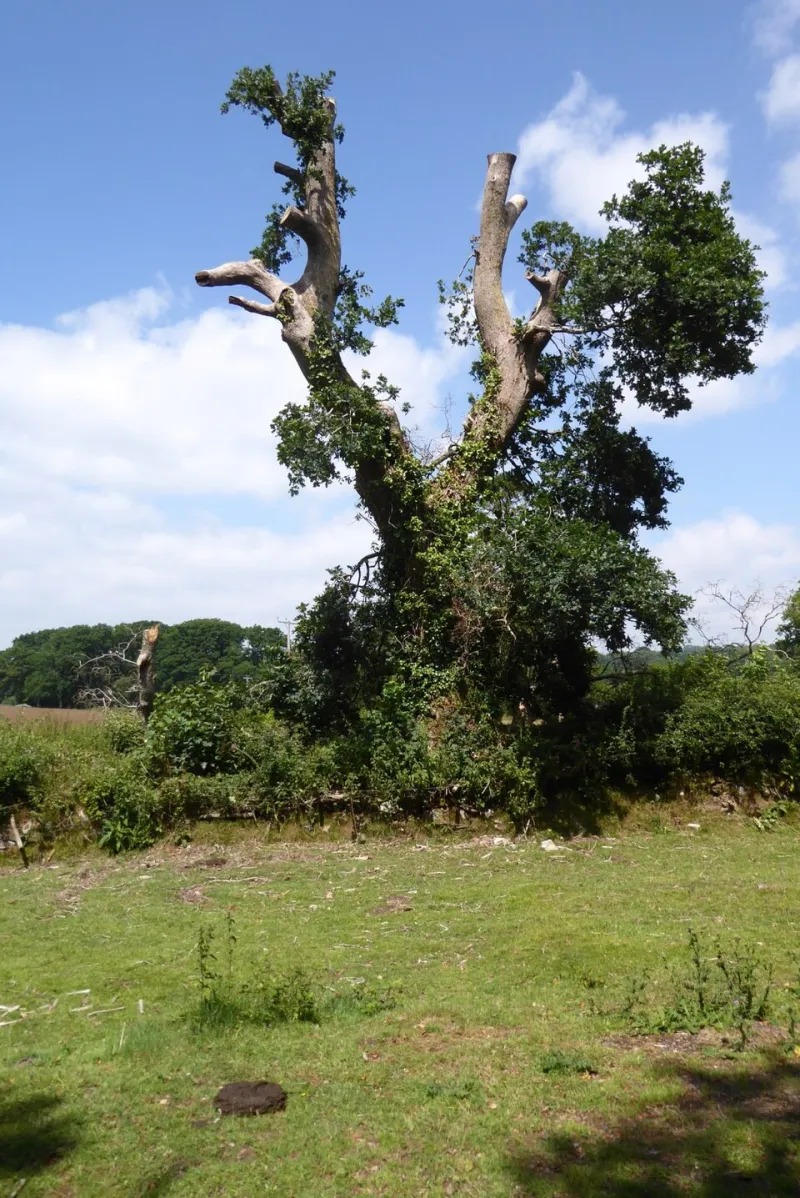
Photo: Philip Halling , CC BY-SA 2.0, via Wikimedia Commons
There is a comforting simplicity to the magic-distance approach. A neighbour says a tree must be at least X metres from a house. A forum thread insists anything closer is a disaster waiting to happen. A leaflet from somewhere uses a round number and suddenly it feels like a rule. The trouble is that trees do not read leaflets, and houses are not built on identical ground. Distance from trunk to wall is a useful starting point, but it is not a verdict.
In a UK garden, the question is not really ‘how close is too close?’ It is ‘what is this tree doing, in this soil, next to this house, with these drains and this foundation?’ That is a conversation, not a tape-measure reading.
Why one number feels so reassuring
Numbers are easy to repeat. ‘Keep it ten metres away’ sounds decisive, and decisiveness is comforting when a big oak is leaning over your extension. But two trees of the same size, both five metres from a house, can pose very different levels of risk. One might be a healthy field maple on free-draining sandy soil beside a 1980s footing. The other might be a thirsty poplar on shrinkable clay beside a Victorian bay with a leaking downpipe.
Even official guidance does not hand out a single blanket distance for every tree and every house. NHBC standards, for example, use tables that account for tree species, water demand and foundation depth rather than declaring that all trees within a set radius must go. That is a clue: the professionals are already having a more nuanced conversation. Homeowners can borrow that mindset without needing to become structural engineers.
The tape measure only measures one thing
A trunk-to-wall measurement tells you about proximity. It does not tell you about root spread, soil volume, drainage, canopy sail area or the age and condition of the tree. Roots often extend well beyond the branch spread, sometimes several times the canopy radius on open ground, but they are not uniform aggressive tentacles all reaching for your foundations. They follow water, oxygen and favourable soil. A compacted driveway, a leaking drain, a border that is watered every summer and a clay subsoil can all change the picture.
Species matter too. Willows, poplars, some oaks and large leylandii have reputations for a reason, but reputation is not the same as a site-specific diagnosis. Birch, Rowan and many ornamentals are generally less thirsty, yet a poorly sited one can still cause trouble if the ground is wrong. The same species can be a low-risk garden tree in one spot and a genuine concern in another.
What actually moves the risk dial
Soil is the quiet variable most homeowners ignore. Shrinkable clay soils swell in wet weather and shrink in dry spells, and that seasonal movement can affect foundations. A tree can add to the moisture deficit in a dry summer, but it is not automatically the villain. Sandy or chalky soils behave very differently. Slope, drainage and past groundworks matter as well.
Drains and paving are the other overlooked characters. A cracked drain can attract roots and soften ground at the same time. Roots lifting a patio are often a nuisance rather than a structural emergency, but they can point to shallow rooting or a leaking pipe. Likewise, a canopy that sways heavily in wind puts more load on the tree and the ground than a compact crown of the same height. Crown density, deadwood and past pruning all affect how the tree catches the wind.
The house itself belongs in the conversation. A modern trench-fill foundation on good ground is a different proposition from a shallow Victorian footing on clay. Cracks in plaster, sticking doors and external brickwork cracks can have many causes, from thermal movement to leaking gutters. Subsidence is an insurance and structural-engineering question, not a cue to start cutting.
A five-minute triage from the back door
Start with a walk around the outside of the house, not a panicked survey of the crown.
- Measure the distance from trunk to wall, but also note how much canopy overhangs the roof. A tree can be far from the wall and still drop deadwood on your gutter.
- Identify the tree if you can. Species, approximate age and overall health are more useful than a single measurement.
- Look at the ground around the base. Fresh heave, cracking, fungus at the root flare or a hollow at the base deserves a second look. Mushrooms alone are not a death sentence, but brackets and decay at the base are worth expert eyes.
- Check drains and paving. Roots in an inspection chamber, a sunken patio or a persistently damp patch near a downpipe are clues to investigate.
- Look up. Large dead limbs over a path, parking space or roof are a genuine concern even if the trunk is 15 metres from the house.
- Check protection before any work. Tree Preservation Orders and conservation areas catch people out, and permission is not optional.
If you have one amber flag, watch it over a season and keep notes. If you have several, or any obvious structural movement, get a professional opinion. A qualified arboriculturist can assess the tree above ground; a structural engineer may need to look at the house. Those are separate jobs.
When to stop worrying and when to call
A healthy tree at a sensible distance, on stable ground, with no drain issues and no deadwood over the house is often a neighbour rather than a threat. It provides shade, habitat and some welcome screening. Removing it because it happens to sit inside a guessed radius is an expensive way to solve nothing.
Call someone in if you see a sudden lean, cracked or lifting ground near the base, fungal brackets at the root flare, large dead limbs overhead, recent excavation close to the roots, or cracking in the house that seems to be progressing. Also call if you simply cannot identify the tree or read its condition. A site visit is cheaper than a panic decision.
Distance still matters. It is just the opening line of the conversation, not the conclusion. Use the tape measure, then use your eyes, your notes and — where the stakes are high — a professional’s judgement. That is how you protect both the tree and the house without turning a garden into a building site.