Letting the Light In Without Lopping the Lot: A Homeowner’s Guide to Crown Lifting
Photo: Paul Glazzard, CC BY-SA 2.0, via Wikimedia Commons
A dark corner of the garden is a familiar British complaint. The lawn is thin, the patio is gloomy by 4pm, and the shed roof is doing an impression of a hedge. The obvious answer seems to be: cut the tree back. But the better answer is often narrower and more careful than that. It is called a crown lift, and when it is done properly it can let in light without turning a decent tree into a butchered stump with ambitions.
What a crown lift actually means
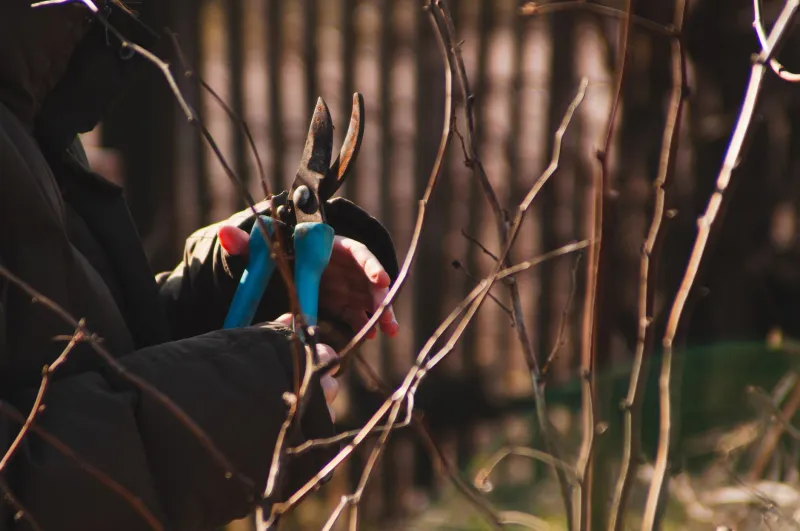
A crown lift — sometimes called raising the canopy — is the removal of lower branches to increase the clear space between the ground and the tree’s foliage. That is it. You are not reducing the overall height, you are not thinning the whole crown to within an inch of its life, and you are certainly not “topping” it. The aim is a clean, sensible gap: enough room to walk under, mow beneath, see the shed, or stop branches rubbing on a roof.
It is usually done for practical reasons rather than cosmetic ones. A low limb over a footpath, a branch brushing a conservatory, or foliage blocking light into a kitchen window are all classic candidates. The tree keeps its shape and its upper canopy, while the lower storey is opened up. Think of it as rolling up the trouser legs, not removing the legs altogether.
Why it is not topping in a different coat
Topping is the blunt approach: cutting back large parts of the upper crown to stubs, usually because someone wants a smaller tree quickly. It is a false economy. It forces the tree into a burst of stressed regrowth, creates weak attachment points, and can leave it more dangerous a few years down the line. A crown lift is different because it works with the tree’s natural form. You are removing selected lower limbs, usually back to the main stem or a suitable lateral branch, not making arbitrary cuts across the canopy.
That distinction matters. A hard prune can remove a large proportion of the tree’s food-producing leaves in one go. A crown lift, done within sensible limits, is far more modest. It should look like the tree has simply grown a little taller underneath. If the finished job looks like a haircut from a difficult year, something has gone wrong.
Safe limits: the numbers that matter
There is no universal figure that suits every tree, but there are useful guardrails. As a rough guide, avoid removing more than 15–20% of the live crown in a single operation. Mature, stressed or slow-growing trees should usually get less. The lower the branch, the more cautious you should be: taking off one or two large limbs can remove a surprising amount of foliage, even if the tree still looks tall from the ground.
Clearance heights are often quoted for paths, roads and buildings, but treat them as starting points, not laws of nature. A common aim is around 2–2.5 metres over a footpath and more over a road or driveway, depending on use. For a garden lawn, you might only need 2 metres or so. The right height is the one that solves the practical problem without stripping the tree’s lower canopy bare. British Standard BS 3998 is the reference point for tree work, and a competent contractor should be working to that kind of framework rather than inventing one on the spot.
Trees that usually take it well — and ones that don’t
Many common UK garden trees respond well to a moderate crown lift. Oaks, limes, ash, sycamore, maple and mature beech can often tolerate sensible lower-branch removal, provided they are healthy. Fruit trees are a different story: apples, pears and plums are better managed with careful formative pruning than with a sudden lift, and the timing matters. Birches and cherries can be more sensitive to large wounds, while conifers generally do not regrow from old wood, so a heavy lift can leave a permanent gap.
Species is only half the story. A tree that is already stressed, diseased, recently transplanted or growing in poor soil has less room for error. So does one with a narrow fork, included bark or a history of bad cuts. In those cases, the question is not “how much can I take off?” but “should I be taking anything off at all?”
Spotting a competent job
A good crown lift is almost boring to look at. The cuts are clean, the branch collar is respected, and there are no stubby little lollipops left behind. The remaining branches should be spaced reasonably, not clustered around old wounds. The tree should still look balanced from the street and from the kitchen window.
Ask what is being removed and why before the saw comes out. A decent contractor will talk about clearance, species, growth habit and the tree’s condition. They will not promise to “take it up to 4 metres” without looking at the tree first. And they should be comfortable saying no if the request would remove too much. If the quote is vague, the van is unmarked and the first suggestion is to “take the top off”, keep looking.
When the light is not worth the loss
Sometimes the honest answer is that a crown lift will not give you the light you want. If the tree is tall and dense, raising the lower branches may make the garden feel more open without solving the gloom inside the house. If the tree is the wrong species, in the wrong place, or already struggling, removing limbs may buy a little brightness at the cost of long-term health. And if the only way to get the clearance is to remove a huge share of the canopy, the tree is probably not the right candidate.
In those situations, think about alternatives: shifting the shed, altering a path, using lighter-coloured paving, or choosing shade-tolerant planting. It is less exciting than a chainsaw, but it is often cheaper than replacing a tree in five years.
A gradual approach beats a dramatic one
Crown lifting works best as a measured, gradual process. Take off a small amount, live with it for a season, and see how the light changes. Trees do not need to be “sorted” in one afternoon. A modest lift every few years is usually kinder than one dramatic session that removes too much at once. The aim is a tree you can live with, not a stump you regret.
If you are unsure, get a qualified arboriculturist to look at the tree rather than guessing from the patio. A short assessment is cheaper than remedial work, and it is far cheaper than removing a tree that could have stayed.