Fruiting Bodies, Not Fortune Tellers: Reading Mushroom Clues Around UK Trees
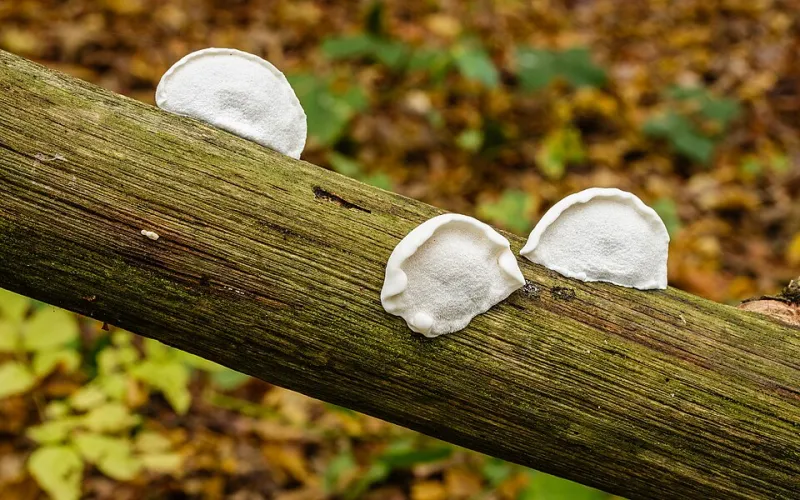
Photo: Agnes Monkelbaan, CC BY-SA 4.0, via Wikimedia Commons
Autumn has a knack for making a mature tree look like the opening scene of a folk horror film. One morning the lawn is just lawn; the next there’s a shelf of bracket fungus on the trunk, a cluster of toadstools by the roots and a neighbour telling you the tree is “obviously dying”. Deep breath. A mushroom is not a verdict. It’s a clue — sometimes a dull one, sometimes a genuinely useful one — and the trick is to read it without panicking or reaching for a saw.
First, a quick reality check
What you’re seeing is the fruiting body: the spore-producing bit of a fungus. The main organism is usually a network of thread-like mycelium inside the soil, the deadwood or the living tree. Think of the mushroom as the apple, not the whole orchard. It can pop up because the fungus is breaking down a old stump, because it has a friendly root relationship with the tree, or because it is feeding on wood that is decaying. Those are very different stories.
That matters because UK homeowners often get one of two reactions. Either the fungus is ignored until a bracket is the size of a dinner plate, or someone declares the tree a danger and starts collecting removal quotes before they’ve identified what they’re looking at. Neither is especially useful. A bit of calm note-taking beats both.
The three broad camps
Most fungi you notice around a garden tree fall into one of three rough groups.
Saprotrophs are the recyclers. They break down dead wood, leaf litter and old roots. A cluster of mushrooms on a long-dead stump, or on a buried piece of old fence post, is often just decay doing its job. It may have nothing to do with the health of the living tree nearby.
Mycorrhizal fungi form partnerships with living roots. Many trees rely on these relationships to get water and nutrients, and the fungus gets sugars in return. Some familiar woodland mushrooms belong here. Finding one in the lawn is not, by itself, a reason to worry — though it is a reminder that the soil under a tree is a busy place.
Parasitic or wood-decay fungi are the ones that deserve more attention. Some colonise living wood and cause internal decay. Bracket fungi on the trunk, especially on a mature broadleaf, can be a sign that the tree is hollowing or softening inside. Honey fungus around the base of a tree or shrub is another one to take seriously, particularly if it keeps appearing across a border. But even then, “take seriously” does not automatically mean “remove immediately”. It means “get a proper look”.
Why “just cut it off” is rarely the answer
Removing the fruiting body does not remove the fungus. The mycelium is still in the wood or soil. Scraping off a bracket, painting over a wound or pouring on a homemade brew is not a cure, and it can make assessment harder later. Please don’t eat anything you find, either. Online identification is not a safety check, and some UK fungi are genuinely dangerous.
You may also see advice to seal a wound or treat a stump with something from a garden centre. For a homeowner with a mature tree, the better move is usually to leave the area alone, photograph it properly and keep an eye on how the tree behaves above ground. If the tree is in reach of a house, path, shed or road, that’s when a professional opinion starts to earn its keep.
How to record what you’re seeing
You don’t need a laboratory. You need a few clear facts.
Take a wide photo showing the whole tree and its surroundings, then close-ups of the fungus from a few angles. Include something for scale — a coin, a plant label or your hand — and note the date. Record exactly where it is: at the root flare, a metre up the trunk, on an old pruning wound, on a dead branch, or out in the lawn. Note whether it is growing from living wood, dead wood or soil. Count how many fruiting bodies there are, and whether they are fresh, old and blackened, or just starting.
Also jot down what the tree is doing above ground: full leaf, thin crown, dieback in the upper branches, a lean, cracks, or sap running down the bark. Recent weather matters too. A wet autumn can bring out fruiting bodies that were quietly present all along. None of this proves anything on its own, but it gives an arboriculturist something to work with.
When to call someone — and what to ask
Call for a professional assessment if you see bracket fungi on the trunk or main limbs of a mature tree, honey fungus around the base, mushrooms appearing from old wounds, or any fungus plus visible decline in the crown. The same goes if the tree overhangs a parking space, a footpath, a conservatory or a neighbour’s garden. It’s not about being alarmist; it’s about matching the level of concern to what the tree could hit if something failed.
Ask for a tree risk assessment or a decay assessment, not just a removal quote. A good arboriculturist will look at the whole picture: species, targets, crown condition, root flare, soil, history and the fungus itself. They may recommend monitoring, pruning, reducing weight in the crown, or further investigation. They may also say the fungus is not a concern. If removal is suggested straight away, ask what evidence is driving that, what the realistic risk is and what the alternatives are. A second opinion is rarely wasted when a mature tree is involved.
The quote you don’t need to accept today
Unless a limb is hanging, the tree has shifted after a storm or something is clearly about to fall, you usually have time to gather information. A mushroom is not a fire alarm. Use the autumn as a fact-finding season: photograph, note, watch. Then get advice that is specific to your tree rather than a generic “fungus means removal” line.
Mature trees are long-term neighbours. They come with leaves in the gutter, shade in the wrong place and the occasional strange growth at the base. Most of the time, the right response is curiosity rather than a chainsaw. Read the clue, keep a record and bring in expert eyes when the stakes justify it.