A Doughnut, Not a Mountain: Getting Mulch Right Around UK Trees
There is something deeply satisfying about a freshly mulched border. The beds look finished, the weeds are suppressed, and the tree has a tidy little skirt of bark chips around its base. Unfortunately, that tidy skirt is often built in completely the wrong shape. A steep cone piled up against the trunk — the classic mulch volcano — is one of those garden habits that looks neat but works against the tree.
Mulch is not a cosmetic collar. It is a surface dressing for the soil, and the trunk needs breathing room. Get the shape right and it can help retain moisture, moderate soil temperature and keep mowers and strimmers at a safer distance. Get it wrong and you can create a damp, airless band around the bark that invites decay and hides problems you would otherwise spot early.
Why a trunk-hugging cone backfires
Tree roots need oxygen. Most of the fine, working roots sit in the top layer of soil, and they do not function well when that layer is smothered by a thick, soggy mound of organic matter. A deep cone against the trunk also keeps the bark constantly damp, which is not what most UK trees want around their base. Bark is a protective layer, not a sponge, and prolonged wetness can soften it and create an opening for fungal problems.
Then there is the root flare — the natural widening where the trunk meets the main roots. On a healthy tree it should be visible, or at least easy to find under a light covering of mulch. Bury it under 20cm of chips and you lose the visual check that tells you whether the tree is planted at the right depth, whether the bark is sound, or whether something has been chewing at the base. In wet conditions, roots may also start growing upwards into the mulch layer, leaving them more vulnerable when the weather turns dry.
A volcano can hide other issues too. Rodents like the cover. Fungal growth likes the damp. And because the mulch holds moisture against the trunk, a small patch of damage can quietly become a larger one before anyone notices.
Reading the warning signs
A mulch mountain does not kill a tree overnight. The damage tends to build up quietly. Watch for a canopy that looks thinner than it should, leaves that yellow or drop early, and dieback at the tips of branches. At the base, look for soft or discoloured bark, fungal brackets, a sour smell, or a trunk that seems to disappear straight into the soil without any widening.
A tree that rocks slightly in wet ground, or one that has started to lean after a windy spell, is a different matter. That needs proper inspection rather than a gardening tweak. The same goes for large cracks, cavities and any sudden collapse of growth. Mulch can improve growing conditions, but it cannot fix structural damage or advanced decay.
The doughnut method
The fix is beautifully simple: think doughnut, not molehill. Pull the mulch back so there is a clear gap of roughly 5–10cm between the mulch and the trunk. The gap does not need to be a moat. It just needs to be enough that bark is not buried and air can move around the base.
Next, flatten the profile. A mulch layer of about 5–8cm is plenty for most garden trees. More is not better; a thick pile can become matted and repel water rather than letting it through. If you already have a volcano, do not dig it into the soil or start hacking at roots. Carefully scrape or pull the excess back from the trunk, widen the ring if you can, and leave the root flare exposed.
Where space allows, extend the mulch out towards the edge of the canopy. That is where many of the feeder roots are working, and a wider ring gives them more benefit than a narrow collar. On a small patio tree or a tight border, just do what fits. A modest, correctly shaped ring is better than an ambitious one that buries the trunk.
How much, how wide, and how old?
Young, newly planted trees benefit from a mulch ring that keeps grass and weeds away from the root zone. Keep the layer around 5cm deep and leave that clear gap around the stem. A ring of at least 50–75cm radius is a sensible starting point if space allows. Check the tie and stake as well; mulch should not be piled against them either.
Mature trees can take a slightly deeper layer, but 7–8cm is usually the upper end of sensible. The important thing is width. A broad, shallow ring is far more useful than a tall heap. For small ornamental trees, keep it shallow and modest. For trees in raised beds or narrow borders, remember that the mulch still needs to sit on the surface, not be mixed into a mound that raises the soil level around the trunk.
Choosing mulch in the UK
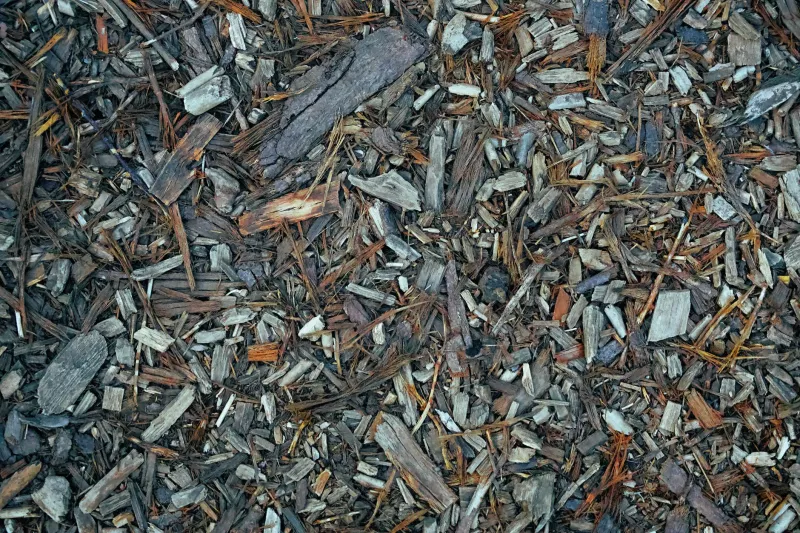
Bark chips, arborist woodchip, leafmould and well-rotted garden compost are all useful. Local woodchip from a tree surgeon is often a good option, provided it is reasonably well aged and not from a diseased tree you are worried about. Leafmould is excellent for soil improvement and has a lovely crumbly texture. Composted bark is another reliable choice for borders.
Avoid thick layers of fresh grass clippings, which can mat down and smell unpleasant. Fresh manure should be composted first. Cocoa shell mulch is best avoided in gardens with dogs. Gravel and slate chips may look smart, but they do not improve the soil in the same way and can be a nuisance to remove later. Whatever you choose, keep it off the trunk and do not pile it against fences or shed walls.
When another bag won't fix it
If a tree is declining despite a sensible mulch ring, the answer is not more chips. Poor drainage, compaction, drought stress, root damage from building work or a disease problem all need a proper diagnosis. A tree with a fungal bracket at the base, a hollow trunk, bark that is loose and crumbling, or a significant new lean should be inspected by a qualified tree professional. It is also worth checking whether the tree is protected before any work is planned.
A ten-minute autumn reset
With winter 2026 on the doorstep, this is a good moment to undo a mulch mountain. Pull the chips back from the trunk, find the root flare, check for damage and damp bark, then spread the mulch into a flat ring. Keep it clear of the stem, water young trees if the ground is dry, and keep strimmers well away. Your tree does not need a volcano. It needs a doughnut.