The Underground Budget: Root Protection for Driveways, Patios and Garden Projects
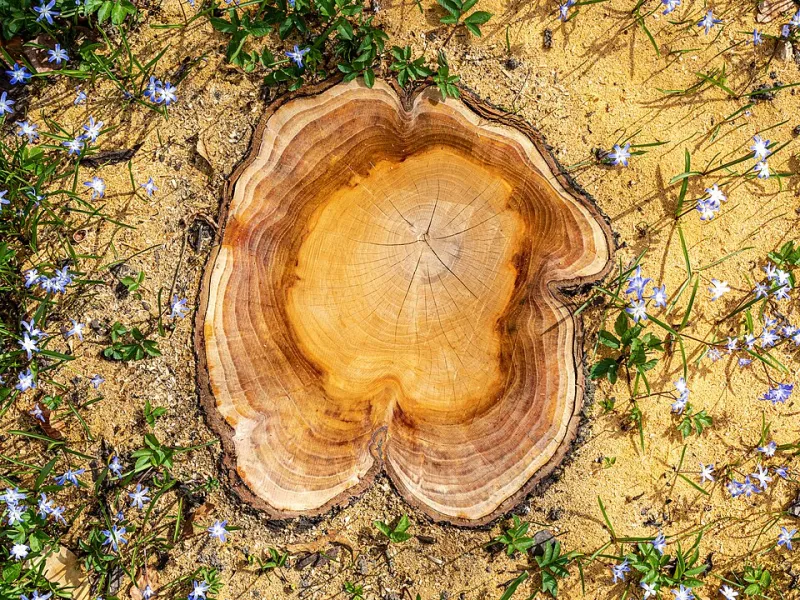
Photo: Dietmar Rabich, CC BY-SA 4.0, via Wikimedia Commons
Ring three tree firms for a quote and you will get numbers for pruning, felling and stump grinding. Ring them about the new driveway and you will get a slightly awkward pause. The underground half of tree care does not appear on anyone's price list, which is precisely why it ends up costing people a tree.
This is the part of the job that never gets sold to you, so here is the case for budgeting for it yourself.
What is actually down there
Most of a tree's root system sits in the top 60cm of soil, and the fine roots that do the drinking and feeding are concentrated in the top 20cm. The anchoring roots run out far further than most people expect, often well beyond the spread of the branches. A useful rule of thumb, and the one written into British Standard BS 5837, is that the root protection area has a radius of twelve times the trunk diameter measured at 1.5m above ground.
Roots go where the air, water and nutrients are. In a British garden that usually means straight under your lawn, your border and the strip of gravel you were thinking of replacing.
The four ways a garden project kills a tree
Compaction. One pass of a mini digger or a delivery lorry over wet soil can squeeze the air out of it. Roots need oxygen as much as water, and compacted soil stays compacted for decades. This is the single most common cause of slow decline after building work.
Level changes. Ten centimetres of topsoil spread over a root plate is enough to starve the feeder roots beneath it. Scraping fifteen centimetres off severs them. Rotavating a border does both at once, which is why the tidy-up often causes more damage than the build.
Severance. Trenches for drainage, services, irrigation, lighting cables and wall footings cut roots clean through. A trench two metres from the trunk can take out a serious proportion of the root plate.
Sealing. A new driveway or patio covers the soil, cutting off rainfall and gas exchange. Impermeable surfaces are worse than permeable ones, but even block paving on a full mortar bed changes how water moves through the ground.
Add cement washout, paint, fuel spills and over-enthusiastic fertilising to the list and the picture is fairly bleak.
The driveway conversation
Work out the root protection area before you open a catalogue. Then you have three honest options.
Avoid it. Route the drive away from the root plate, keep the existing surface, or accept a narrower drive. Dull, but free.
Bridge it. A no-dig approach uses a cellular confinement system laid on the existing ground level, filled with aggregate and topped with a porous surface. Load is spread rather than concentrated, soil stays uncompacted, and levels stay where they were. It costs more than tarmac and can look excellent.
Sacrifice it. Sometimes the tree has to go. That is a legitimate choice, but make it deliberately, on a quote, rather than discovering it in 2031 when the crown goes thin.
Whichever you pick, the rule that matters most is this: keep the existing ground level. No scraping, no filling, no levelling up to meet the patio.
Patios, decking and retaining walls
Patio footings are trenches with a nice name. A retaining wall changes soil levels on both sides, and a wall built a metre from a mature trunk is effectively a root guillotine with a decorative finish.
Decking on individual pads is usually friendlier than a solid slab, provided the pads are kept clear of the primary roots and nothing is excavated deeply. Keeping the finished patio at the same level as the lawn is not just good drainage practice, it is root protection.
The protective kit that costs less than the tree
- Fencing. Panels around the root protection area, erected before the first delivery arrives, not after. Sign them. Nothing stored inside them, no mixing, no washing off, no skips.
- Ground protection. For the unavoidable run to the back garden, use trackway mats or scaffold boards over a geotextile membrane. Cheap compared with a mature oak.
- A mulch ring. Five to ten centimetres of bark chip, out as wide as you can bear, kept clear of the trunk itself. No volcano mounds against the bark, no digging it in, top it up yearly.
- Water. A slow soak once a week in dry spells, for the first two growing seasons after any work near the roots.
Signs you are already too late
Root damage does not announce itself. It appears two to five years later, which is what makes it so easy to ignore and so expensive to fix.
Watch for a crown thinning from the tips inwards, smaller leaves than usual, early autumn colour in August, heavy leaf drop in July, tufty epicormic growth sprouting straight out of the trunk, fungal brackets at the base, bleeding patches of bark, and dieback confined to one side. That last one is often the side where the work happened. A new lean, or cracks and heave in the soil, needs a professional opinion quickly rather than a second opinion from the internet.
When paying an arboriculturist is the cheaper option
Protected trees. If the tree has a Tree Preservation Order or stands in a conservation area, speak to the local planning authority before anything happens within the root protection area. Causing damage can be prosecuted, with fines of up to £20,000 per tree in the magistrates' courts in England and Wales, plus the cost of replacement planting.
Planning applications. A BS 5837 tree survey, arboricultural impact assessment, tree protection plan and method statement are usually required, and they are not documents to write yourself the night before submission.
Before anyone digs. Root investigation, sometimes supervised, sometimes with an air spade, establishes where the roots actually are instead of where a leaflet says they might be.
After damage. Remediation, from soil decompaction to aeration and a watering regime, is worth doing properly rather than guessing.
As a rough guide, a survey and method statement typically runs to a few hundred pounds. A mature tree is worth several thousand, cannot be replaced in your lifetime, and adds real value to the property. Look for an arboriculturist rather than a jobbing tree firm, ideally a Professional Member of the Arboricultural Association, and ask to see the report before you pay for it.
The pre-project checklist
- Measure the root protection area before ordering anything.
- Fence it before the first lorry arrives.
- Store materials and skips on hardstanding, never on soil under the canopy.
- Keep existing ground levels, both up and down.
- Mulch rather than pave wherever you can.
- Photograph the tree before, during and after the project.
- Water through dry spells for two seasons afterwards.
- Book the survey early if the tree is protected or the works fall inside the root zone.
The bottom line
Roots are a line item. Put them in the budget at the start, along with the fencing, the mats and the mulch, and the invoice is small. Leave them out and the bill arrives years later, made out to a tree you cannot save.